FEMALE ALOPECIA | MY STORY | MY FIGHT against alopecia
Today I want to tell you what my path has been, my journey with hair loss. I want to make it clear that I don't intend to give any professional medical advice, but only to tell My story in case it helps you if you are going through it.
I will use several photos, because I would have liked to see real photos of women who were going through this, since that way I could have gotten a more realistic idea of what my future outlook was going to be, but it is hard to find this kind of content.
In my case, I put myself here in front of the camera because I don't find it shameful at all and I know there are women who suffer from this and in case it helps them. I don't mind showing what my hair is like now and what it has been in the past.
There are a couple of photos that I even find hard to look at, but I hope this article is useful to you if you are suffering from hair loss or suffer from some type of female alopecia.
This is how my hair looks now. The hair loss is evident; it's not that it's super advanced, but I find it a little hard to go out like this, especially on rainy days or as soon as my hair is a little greasier.

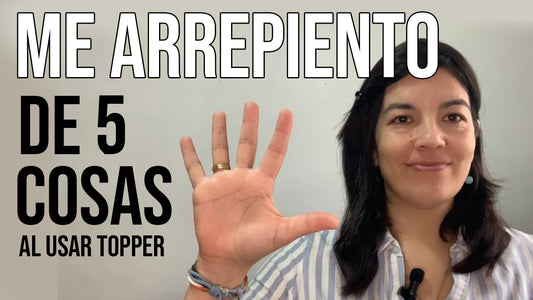
So it's hard, I have no solution for it, and that is why I now use a hair prosthesis.
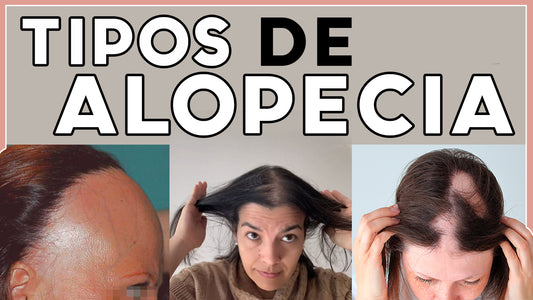
So, from here on, as I was saying, I simply intend for you to see what the usual path is, in the case of androgenic alopecia, to tell a little about how it started, in case it seems familiar to you and helps you.
Childhood with alopecia
If we go back to childhood I must say that I never had a lot of hair. If my mother made me a braid, it was quite small; my schoolmates told me it looked like a toilet brush, they were "very kind" (note the irony). But well, it never affected me much either.
My mother had little hair, my grandmother too, my relatives too, so I didn't think it was a very important thing either.
Adolescence with alopecia
The first change I noticed in my hair was when my period started. My hair became much greasier; in fact, before I used to wash it every five days, maybe seven, and as soon as puberty or adolescence began, I had to wash it almost every day, so that was the first change, but I didn't notice a huge change in density either.
This is the first photo that I'm going to show and as you can see, I think I'm 17 or 18, you can see, although the photo isn't very good, a little bit of the beginning of an opening in the central parting.

Since I didn't have much hair, it wasn't something I gave much importance to, but now in retrospect, I can start to see that the problem was already starting there, right in adolescence, and from then on, more of the same: the parting keeps opening and when the hair is a little cleaner it looks a little better and when it is a little dirtier it looks a little worse
At that time, I already start trying to change the side of my parting, I try to put in a hairpin somehow to cover that lack of hair and that's where it starts to be more and more noticeable.
My wedding with Alopecia
One of the concerns of women with alopecia is perhaps what to do on the wedding day. How to do the hairstyle?
I would have preferred to wear my hair down, but I didn't have abundant hair to wear it down, so an updo was ideal.

In this photo you can see how, behind the feathers, there is a hairpiece, and this is curious, because I had never thought about it, but I did use a hairpiece, but only for the wedding day and if you look at the front you can see the lack of hair.
I noticed the hair loss for the first time at 26, probably because a hairdresser told me, not because I noticed it myself and that was when I got highlights for the first time, some little streaks to give dimension to the hair and make it look like a little more.
Fear of going to the hair salon
By that time, I had already started to be a little afraid of going to the hair salon, because they were going to tell me I was doing something wrong, whether they were washing my hair with water that was too hot or too cold, the wrong shampoo, in short all those things that I have already told, but I think that was the first time I became aware that something was happening.
Alopecia from the age of 30
At 30, I decide to go back again to short hair with bangs, which is what I wore for a long time to try to cover the hair loss or to make the thin patches as little visible as possible, especially at the front.
A year earlier I had gotten a perm, again trying to give volume and probably following the advice of some hairdresser, but that didn't do anything either.
I thought... I already have little hair, if I damage it by doing more treatments, it's going to be worse, so from the age of 30 I started to wear my hair quite short so that it didn't look so poor.
Pregnancy with alopecia

At the beginning of the pregnancy, you can see the parting; I tried to wear it toward the other side, but the opening can be seen quite obviously, and then when I was about to give birth you can see a little more hair.
I see it as having more shine but, as you can see in this photo, it keeps opening in several directions; you can tell it has quite a bit more shine, but the hair loss is also still quite obvious.

I had the feeling that during pregnancy my hair had been quite a bit better.
After having the baby, I cut my hair again and during the first months I still saw my hair more or less fine and, as I said, even with more shine and with more quantity.
From when the baby is about five or six months old, there is significant hair loss, so I have no photos, since it is hard to take photos when you don't feel well or don't feel pretty enough.
Close to 40 with alopecia
And this is the photo I don't like to see, since the scalp is totally visible and it's very thin. Here I am 36...

I think it is a moment when I decide not to appear in more photos, in fact, I find it hard to find some in which I appear. From that moment I start wearing hats, caps, anything I can think of to try to cover my alopecia problem and so that it isn't so noticeable.
So here at 36, 10 years have passed since that first time when I am more or less aware that there is some problem, because they tell me at the hair salon, and about 10 years since I start to have changes, let's say hormonal, that affect my hair.
I reach 39 and this is a hairstyle I wore for a long time, trying to make it less visible, trying to pull the front part back and trying not to make my hair loss so visible and using hair fibers or black-colored shampoo.

At 40 and 41, I try again to do the same hairstyle, but it is still noticeable, and it is at 42 when it is a decisive moment in which I see that something is not quite right since every time, my alopecia gets worse.
There have been days when someone told me to shave my head, which I still say is an option you can consider, but in my case, I don't see myself shaved, it doesn't convince me, but I see that many girls do it and it looks quite good on them. In fact there are famous people with alopecia who do so, as I show in this video:
From that moment, it was when I considered that I had to do something and by then I had been looking into the subject of toppers, of hair prostheses, but I didn't really know what effect it was going to have.
I start using a hair Topper
This is a photo of the first day I wear the topper and after having gone to the hair salon.
I remember I went to the hair salon, some friends had come to visit us and we went to lunch together. A friend whom we hadn't seen for a couple of years didn't notice anything. Imagine that she had seen me a couple of years before, just before the pandemic, so although my lack of hair was quite obvious, that day she didn't even notice and the people I met at that moment didn't notice either.

So well, that's my happy face on seeing myself with hair.
In these last years, what it means to me to be able to go out, travel and be able to take photos of myself or with my family is priceless. I feel much better.
From that photo in which I saw myself so badly and decided not to take any more photos, to now, you can already imagine how it feels, and that is only one of the benefits that deciding to use a hair prosthesis has given me.
Not having to worry about how my hair is in the morning, whether I have to wash it or not, whether I'm about to go out and it's very cold and if I have to wash it, I'll have to go with wet hair or have to dry it so it looks a little better; these are things that no longer complicate my life, because I put on the topper and that's it.
Conclusion
Well, that is my journey from adolescence onward. Up to now, as I have said, when you look back you can see a little more how the process was, which is why I show it in case you feel or recognize yourself in this kind of photos
If something similar is happening to you, I think that right now, and especially if you are young, there are many more treatments that work, and they are more abundant than before, so it is something you can talk about with your dermatologist.
I also want to tell you that it's okay, you are not alone, there are many, many women going through this and I think it is said that 30-40 or even 50% of women will at some point in their lives go through some type of hair loss.
In the case of androgenic alopecia it is quite common in European women. We have very fine hair and it seems that it is a quite common autoimmune problem, so there are many women who suffer the same, so you are not the only one.
The more visibility we give, the easier it will be to accept it and also to accept the different options that exist.
If you want to go for a treatment, if you want to shave your head, if you don't want to do anything, if you want to wear a hair prosthesis, well, any of those options will be valid and will be more and more commonly accepted by the rest of society.
If you have seen yourself reflected in any of these photos or if your story has been, or is, similar or different, please let me know in the comments of the YouTube video.
Take good care of yourself and write to me on whatsapp if you want a free consultation.
Bye.