Alopecia and Menopause
We can start this article by putting things in a bit of context and mentioning some facts about menopause.
When does menopause begin?
The age at which menopause begins varies depending on the area you are from, for example...
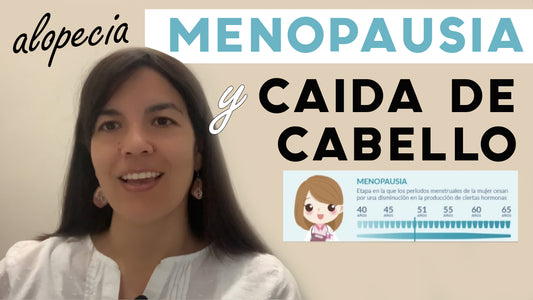
- In European and North American women the average age of onset of menopause is between 51 and 52 years old.
- In Latin America the average age of onset of menopause is around 48-49 years old
In my case, I am 45 years old and I could be in the period called pre-menopause, which is a period of about 6 years, when some symptoms of menopause can already start to be seen.
One of the symptoms of menopause is hair loss, but it must be said that it affects Caucasian women much more than other minorities; in fact, many of the women who call me asking for advice are Spanish and have this problem of androgenic alopecia.
It seems that in other minorities it is not as common, as is the case of this Chinese ethnic minority...

They have very, very long hair. I was able to visit one of these villages a couple of times, and the last time I went, I visited them with my mother, so you can already imagine the scene... the two of us half bald visiting these women who have very, very long hair.
One of them told me that they cut it off, I think I remember when they got married, but they always keep it together with their hair. They put it on and make a hairstyle they feel very proud of.

One of them told me that the secret of that very long, healthy hair without gray hairs was that they wash it with the water in which they have washed rice, but I'm almost sure it has to do with genetics, but well, it's a piece of advice they gave me at that moment.
Alopecia in menopause
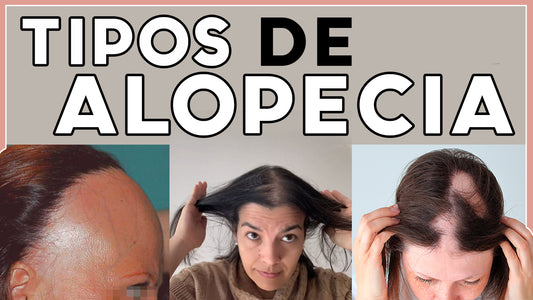
As for alopecia in menopause, we have to distinguish two cases, one would be the one I am in, that you have had alopecia before menopause or before the age of 30, where the prognosis is a little worse because it advances much faster.
The other case would be that you have had hair your whole life and now, from menopause onwards, it becomes weaker.
Women affected by menopause
Alopecia in menopause is something that will affect 50% of women and yet there are few clinical trials on the subject.
We could say that we are the great forgotten ones of these pharmaceutical companies, so most of the medications that are prescribed are off-label medications, that is, medications that were created for another type of ailment, another type of disease, but which have been noticed to have this positive effect on alopecia and that is why they are prescribed.
The problem with this is that the doctor has to evaluate the benefits and risks in each particular case. So if you have to go to the doctor, your family doctor or general practitioner may decide not to prescribe a certain medication, because in your case the risks are greater than the benefits.
Causes of menopause
Hair loss is produced by a hormonal imbalance, which in many cases of alopecia is something genetic. You start to see your part getting wider and wider, and you lose hair especially in the crown area. Comparing it with the case of men, it would be like starting to have receding hairlines and even going bald.
This usually happens because estrogens have been protecting us from this loss, but as we get older, those levels fall and we lose that protection.

So here, one might think... faced with this hair loss, it seems like something quite simple to solve: if the problem of hair loss is a hormonal imbalance, then you just have to find a medicine that helps balance it and that's it.
Well, it would be the ideal remedy, however it seems a little more complicated than this, because of what I was telling you before. Since there are not enough clinical trials for women, we are the great forgotten ones of these pharmaceutical companies.
Medications for alopecia in menopause
To give you an idea. A while ago, medications such as flutamide were used, but it stopped being prescribed because someone died from hepatitis.
Another medication that was used was cyproterone acetate, but it also seems it caused miniangiomas, so in cases like that, it is normal for your general practitioner or family doctor to look at your particular case, see the risks and benefits, and not even prescribe this type of medication.
One of the most widely used medications for alopecia today is oral minoxidil 5 milligrams, not topical, since the problem with the topical one is that it causes itching in many women and also makes the hair very dirty, so you have to wash it more and, as a consequence, it loses a bit of the effectiveness of topical use.

There is also finasteride, but again, one of the issues with finasteride is that it takes quite a long time to take effect, approximately 8 to 10 months, and so many women may get discouraged, because they see that it is quite slow.
This is important, since there are some studies that seem to link the use of finasteride with depression, although it is a little difficult to analyze the correlation between one and the other, because when you reach menopause and you have or had a great mane of hair and now suddenly you find yourself without hair, that probably also causes you some depression. So it is hard to assess whether this comes from the medication or from the situation itself.
Conclusion
The good thing is that, if alopecia appears from menopause onwards, this type of alopecia has a slower evolution than if you started earlier like me.
With regard to medications, the bad thing is that for many women being on medical treatment is not the most pleasant thing, since many of these medications are not recommended when you are of childbearing age or are thinking of getting pregnant.
If you are in menopause, we can rule this out, but even so, you still have to evaluate the benefits and risks of taking medications, because however safe they may be, it is still a medicine, so it is something you have to take into account.
In my case, and after trying medications, remedies for alopecia, shampoos for hair loss etc., the solution for me has been a hair prosthesis.
This is the solution I find much more practical, although it is not a cure, it is something that helps me cope with alopecia in a much more upbeat way and it has improved my quality of life enormously.
This is how I end these little reflections and details about alopecia in menopause, and I hope that in some way this article has been useful to you.
Bye.